Choosing the best Aluminum Railing for your project involves more than comparing colors and prices. The right system must balance safety, durability, appearance, and installation conditions. A railing may look elegant in a showroom, yet feel unsuitable beside a coastal deck or a narrow balcony. Salt air, strong sunlight, snow, and frequent use can all affect performance.
Renovation expert Mike Holmes has often said, “Safety is always the most important thing.” That principle should guide every railing decision. Check the required height, spacing, load performance, and mounting method before choosing a design. Local building requirements still matter. Product specifications matter too. A reliable manufacturer should provide clear engineering information, finish details, warranty terms, and installation instructions.
In practical terms, examine the project surface first. Is it concrete, timber, composite decking, or masonry? A post installed into a solid concrete edge needs different hardware than one fixed to a wood-framed deck. Touch samples in natural light. Look closely at joints, brackets, fasteners, and protective finishes. Small details often reveal major quality differences.
Experience also teaches caution. The cheapest option can become expensive after movement, corrosion, or difficult repairs appear. Still, premium pricing alone does not prove better performance. That is where judgment becomes necessary. This guide will compare railing profiles, finishes, infill styles, maintenance needs, and installation factors. It will also question common assumptions, because no Aluminum Railing system is perfect for every project. Check the details twice. A safe, attractive result begins before the first post is installed.
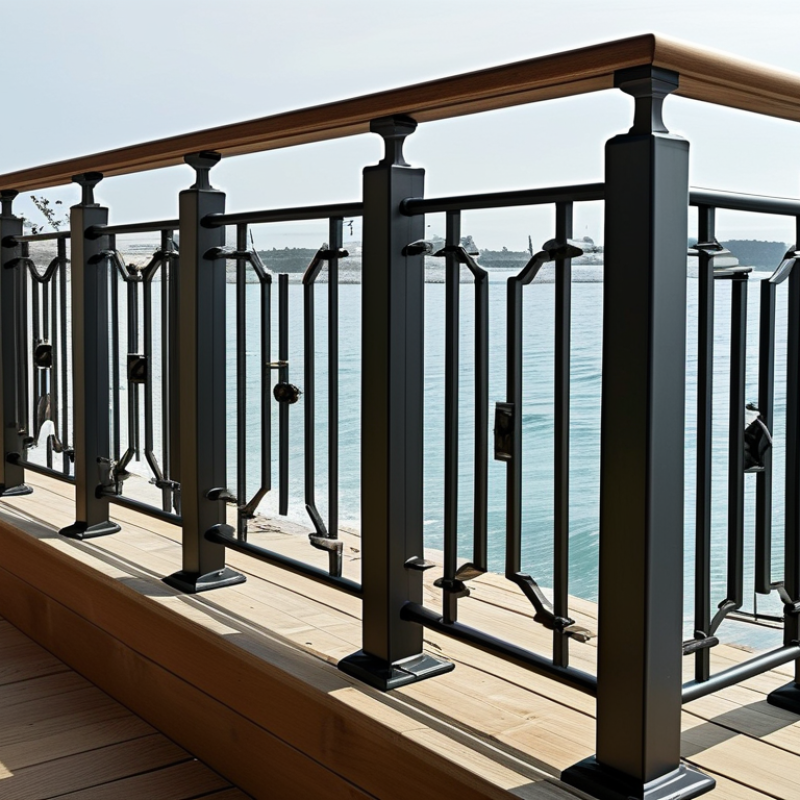
Choosing an aluminum railing starts with the project, not the finish color. Measure the span, stair geometry, mounting surface, and expected user load. For public areas, confirm local height, opening, and handrail requirements before ordering materials. A beautiful profile cannot correct weak anchoring.
Coastal exposure changes the decision. Salt, moisture, and temperature swings can accelerate corrosion around fasteners and cut edges. Specify suitable alloy, protective treatment, drainage paths, and compatible hardware. The International Aluminium Institute reports that recycled aluminum requires about 5% of the energy used for primary production. This supports sustainability goals, but recycled content alone does not prove structural suitability. Check tested performance instead.
Budget calculations should include freight, drilling, touch-up work, and future inspections. The National Association of Home Builders has repeatedly identified labor and material costs as major drivers of residential construction budgets. That makes modular sections attractive when access is difficult. Still, fewer posts may increase deflection or load demands. I have seen drawings look precise while overlooking an uneven concrete edge. Allow adjustment points and verify the substrate on site. Small gaps, exposed threads, or mismatched metals deserve attention. They often become expensive repairs. Choose the simplest system that meets documented loads, environmental conditions, maintenance expectations, and installation limits.
Aluminum railing should match the building’s character, not only its price. Square profiles create clean, modern lines, while round profiles feel softer and more traditional. Slim pickets can open a balcony view, but wider posts often feel steadier under hand pressure.
The Aluminum Association reports that nearly 75% of aluminum ever produced remains in use. That durability supports long service life when the design suits the site.
Surface finish matters just as much as profile shape. A powder-coated finish provides consistent color and helps resist moisture, scratching, and ultraviolet exposure.
For demanding outdoor conditions, specify coatings tested under AAMA 2604 or AAMA 2605 performance standards. These standards address weathering, adhesion, and color retention.
The International Aluminium Institute reports that recycled aluminum uses about 5% of the energy required for primary aluminum production.
Recycled content can support sustainability, but its appearance may vary slightly. That detail is easy to overlook.
Tips:
Hold finish samples outdoors for several days. Check them after rain, dust, and direct sunlight. Choose darker colors carefully; they can reveal scratches faster.
I once selected a narrow profile for a coastal project and underestimated wind exposure. It looked elegant, but the structure needed stronger posts. Review local load requirements with a qualified installer, and confirm drainage around every post before final approval.
How to Choose the Best Aluminum Railing for Your Project
Strength starts with the alloy, profile, span, and connection—not appearance. The Aluminum Association’s Aluminum Design Manual lists 6063-T6 aluminum with a typical yield strength near 31 ksi. Actual values vary by temper and supplier. The 2024 International Building Code generally requires guards to resist a 200-pound concentrated load and a 50-pound-per-linear-foot uniform load. Local adoption may differ. A permit review matters.
Safety also depends on details people rarely photograph. Check guard height, opening dimensions, handrail grip, and return points against the adopted building code. A railing can feel rigid while its anchors loosen in cracked concrete. On a coastal project, salt deposits around fasteners deserve regular inspection. Small gaps matter. Drainage matters too.
ASTM E985-22 provides performance requirements for permanent metal railing systems, including loading and component behavior. Ask for alloy, temper, engineering calculations, test evidence, and installation instructions. Do not accept “heavy-duty” as proof. A qualified engineer should verify post spacing, base plates, substrate capacity, and wind exposure. I have seen strong rails fail because installers skipped washers or over-tightened bolts. That mistake is ordinary, not dramatic. It is also preventable. One detail still deserves reflection: code compliance on paper cannot compensate for poor field workmanship. A documented inspection after installation can reveal movement, sharp edges, or uneven spacing before people rely on the railing.
How to Choose the Best Aluminum Railing for Your Project
Installation method affects strength, appearance, and future repairs. Surface-mounted rails use base plates over finished decking, making replacement simpler. Fascia-mounted systems attach to the deck edge and preserve walking space. Core-drilled posts can look clean, but they demand accurate drilling and careful waterproofing. The substrate decides. I have seen excellent railings fail because anchors entered weak wood or cracked concrete.
Durability depends on both aluminum quality and coating performance. The International Aluminium Institute reports that recycling aluminum can save up to 95% of the energy required for primary production. Its industry data also indicates that about 75% of aluminum ever produced remains in use. That long service potential still depends on drainage, fasteners, and coastal exposure. Salt changes everything. Select corrosion-resistant hardware, isolate dissimilar metals, and avoid trapping water inside posts. ASTM E935 testing can help verify structural performance, while AAMA 2605 addresses coating tests for color retention, chalk, gloss, and corrosion resistance.
Maintenance is usually light, not zero. Wash railings with mild soap and fresh water several times yearly, especially near roads or shorelines. Inspect joints, anchor plates, and end caps after severe weather. Small scratches deserve prompt attention before corrosion spreads around exposed hardware. The U.S. Department of Energy notes that aluminum’s recyclability supports material efficiency, but recycling cannot correct poor installation. I still prefer checking fastener torque during the first seasonal inspection. It feels excessive, yet movement often begins where nobody looks.
Comparison of typical installation effort, annual maintenance frequency, and expected service life for common aluminum railing installation methods.
Surface-mounted systems are generally the fastest to install, while embedded or post-installed systems usually require more preparation but can provide stronger long-term stability. Aluminum railings typically need only periodic cleaning and inspection because the material does not rust.
Choosing an aluminum railing starts with the project budget, but the lowest quote can hide important costs. Compare material thickness, post spacing, finish quality, hardware, delivery, and installation. A quote that excludes stair sections or concrete anchors is not a real comparison. Ask suppliers for itemized pricing, technical drawings, load information, and written warranty terms.
I have found that reliable suppliers answer detailed questions before receiving an order. They explain alloy selection, powder-coating preparation, corrosion resistance, and replacement-part availability. Request physical finish samples when possible. A small color difference can become obvious across a long balcony. Check production capacity and delivery dates, especially when several trades depend on the railing.
Long-term value depends on maintenance and repair access. Aluminum resists rust, but it still needs periodic cleaning near roads, coastlines, or industrial areas. Inspect fasteners, joints, drainage points, and surface damage during routine building maintenance. One mistake I made was focusing too heavily on the initial price. The cheaper system required custom adjustments during installation, adding labor and delaying other work. That experience changed my supplier checklist. I now calculate expected service costs over ten or twenty years, not just the purchase invoice. Also consider how easily a damaged panel, post, or connector can be replaced without removing an entire railing run.
| Evaluation Dimension | Standard Aluminum Picket Railing | Aluminum Glass-Panel Railing | Aluminum Cable Railing | Recommended Selection Guidance |
|---|---|---|---|---|
| Typical material and system cost | Approximately US$35–$75 per linear foot, excluding installation | Approximately US$70–$180 per linear foot, excluding installation | Approximately US$60–$140 per linear foot, excluding installation | Use pickets for budget control; choose glass or cable when unobstructed views justify the premium. |
| Typical installed project cost | Approximately US$80–$160 per linear foot | Approximately US$150–$350 per linear foot | Approximately US$130–$280 per linear foot | Obtain site-specific quotations because stairs, access, demolition, engineering, and local labor can materially change the total. |
| Common aluminum alloy | 6063-T5 or 6063-T6 extruded aluminum is commonly used for architectural components | 6063-series extrusions with engineered glass channels or clamps | 6063-series posts and rails with stainless-steel cable fittings | Confirm alloy, temper, wall thickness, and structural calculations rather than selecting by appearance alone. |
| Finish options | Powder coating or anodizing; common colors include black, white, gray, and bronze tones | Powder coating or anodizing with tempered or laminated safety glass | Powder coating or anodizing with corrosion-resistant stainless fittings | For exterior exposure, request documented coating performance and verify color consistency across batches. |
| Corrosion resistance | Very good in normal outdoor conditions; aluminum forms a protective oxide layer | Very good, although fasteners and glass fittings require attention in coastal or pool environments | Very good for aluminum; cable and fittings should be selected for the project’s chloride exposure | Near salt water, specify compatible metals, drainage, rinsing access, and a marine-exposure coating system. |
| Routine maintenance | Wash with mild soap and water one to two times per year; inspect fasteners and coating | Clean aluminum plus regular glass cleaning; inspect gaskets, clamps, and drainage points | Clean aluminum and inspect cable tension, fittings, and surface staining | Picket systems usually offer the lowest ongoing cleaning and adjustment burden. |
| Expected service life | Often 25–40 years or more when correctly designed, finished, installed, and maintained | Often 25–40 years for the aluminum structure; glass and seals may require earlier replacement | Often 25–40 years for the aluminum structure; cables and fittings are wear components | Treat service life as a design estimate, not a guarantee; climate, loading, finish quality, and maintenance are decisive. |
| Typical lead time | About 2–6 weeks for standard colors and common configurations | About 4–10 weeks because glass sizing, fabrication, and delivery require coordination | About 3–8 weeks depending on post layout, fittings, and cable fabrication | Confirm production time, freight time, approval drawings, and replacement-part availability before ordering. |
| Installation complexity | Low to moderate; sections can often be field-cut and assembled | Moderate to high; requires precise measurement, careful handling, and approved glazing practices | Moderate; accurate post alignment and final cable tensioning are essential | Select a supplier that provides shop drawings, installation instructions, and technical support. |
| Supplier type to consider | Local fabricator, architectural railing distributor, or specialized installer | Specialized railing supplier with qualified glass-processing and installation capability | Specialized railing supplier or experienced metal fabricator familiar with cable systems | Compare technical capability, local code knowledge, warranty terms, references, and after-sales service—not price alone. |
| Code and safety checks | Verify required height, opening limits, guard loads, handrail dimensions, and anchorage | Verify safety-glazing requirements, impact performance, guard loads, and edge protection | Verify cable spacing, deflection, tension, guard loads, and child-safety requirements | Use the applicable local building code and obtain professional engineering where required. |
| Long-term project value | High value for most residential and light-commercial projects because of balanced cost, durability, and maintenance | High visual value for premium projects, but higher initial cost and cleaning requirements reduce payback in some locations | Good value where views and contemporary design are priorities; periodic tension adjustments should be budgeted | Evaluate total cost of ownership: purchase, installation, cleaning, repairs, replacement parts, and expected service life. |
| Best-fit application | Decks, balconies, stairs, multifamily housing, and general exterior projects | View-oriented balconies, terraces, hospitality areas, and high-end residential work | Modern decks, sloped sites, balconies, and locations where transparency is important | For a balanced project outcome, start with a code-compliant picket system and upgrade only where the design benefit supports the added cost. |
Cost ranges are indicative U.S. market estimates for exterior projects and can vary by region, project size, site access, design complexity, engineering, finish, freight, labor, and local code requirements. Obtain written quotations and verify compliance with the applicable building regulations before purchase.
: Measure the span, stair angles, mounting surface, and expected user load. Check the concrete edge or deck condition on site. A clean drawing can still miss uneven surfaces.
Square profiles create sharp, modern lines. Round profiles feel softer and more traditional. Slim pickets preserve views, while wider posts feel steadier.
Choose suitable aluminum, protective treatment, drainage paths, and compatible hardware. Use corrosion-resistant fasteners. Separate dissimilar metals to reduce corrosion risk.
No. Recycled content supports sustainability goals, but it does not prove structural performance. Check documented load tests and material suitability. Appearance may vary slightly.
Surface mounting simplifies replacement over finished decking. Fascia mounting preserves walking space. Core drilling looks clean but requires accurate drilling and waterproofing.
Powder coating helps resist moisture, scratches, and ultraviolet exposure. Choose a finish tested for weathering, adhesion, and color retention. Hold samples outdoors for several days.
Include materials, freight, drilling, touch-up work, and future inspections. Modular sections can help when access is difficult. Fewer posts may increase deflection or load demands.
Wash it with mild soap and fresh water several times yearly. Inspect joints, anchor plates, end caps, and fasteners after severe weather. Small scratches need prompt attention. Maintenance is light, not zero.
Choosing the best Aluminum Railing begins with a clear understanding of your project’s requirements, including location, intended use, design preferences, budget, and local conditions. This guide explains how to compare railing styles, profiles, colors, and surface finishes to achieve the right balance of appearance and performance. It also highlights the importance of evaluating structural strength, user safety, and compliance with applicable building codes before making a final decision.
The article further reviews common installation methods, maintenance expectations, corrosion resistance, and long-term durability. By comparing material quality, supplier reliability, initial costs, and future upkeep, project owners can make a more informed investment. A well-selected Aluminum Railing system should not only complement the surrounding architecture but also provide dependable protection, efficient installation, and lasting value throughout its service life.

Qianyu