How to Choose the Best Black Aluminum Fence for Your Property?

Time:2026-09-29 Author:Liam
0%

Choosing the right Black Aluminum Fence is not only about selecting a stylish dark finish. It is about matching security, property design, maintenance needs, and local site conditions. A fence beside a sloped garden may require stepped panels, while a level driveway can use a cleaner, continuous line. Small details matter, including post spacing, gate swing, fastener quality, and the thickness of each rail. The wrong choice can look acceptable in a showroom but feel weak beside a large masonry home.

Fence designer and industry consultant Daniel Mercer says, “A good fence should fit the property before it tries to impress the owner.” That principle is easy to overlook. Black aluminum often creates a crisp boundary, but its appearance changes under bright sun, wet weather, and surrounding landscaping. Matte finishes can hide fingerprints and minor marks better than glossy coatings. Powder coating also deserves attention, because uneven coverage may lead to premature fading or surface damage. Certifications and manufacturer warranties are useful, but they should not replace careful inspection.

This guide examines how to choose the best Black Aluminum Fence for your property. It considers height, picket spacing, ornamental details, corrosion resistance, gate hardware, installation conditions, and long-term upkeep. Budget will matter. So will personal taste. A highly decorative fence may suit a historic façade but conflict with a minimalist home. I have seen attractive designs fail because drainage, soil movement, or gate clearance was ignored. That is a useful warning. The best decision is rarely the most expensive one; it is the option that remains practical, secure, and visually balanced after years of everyday use.
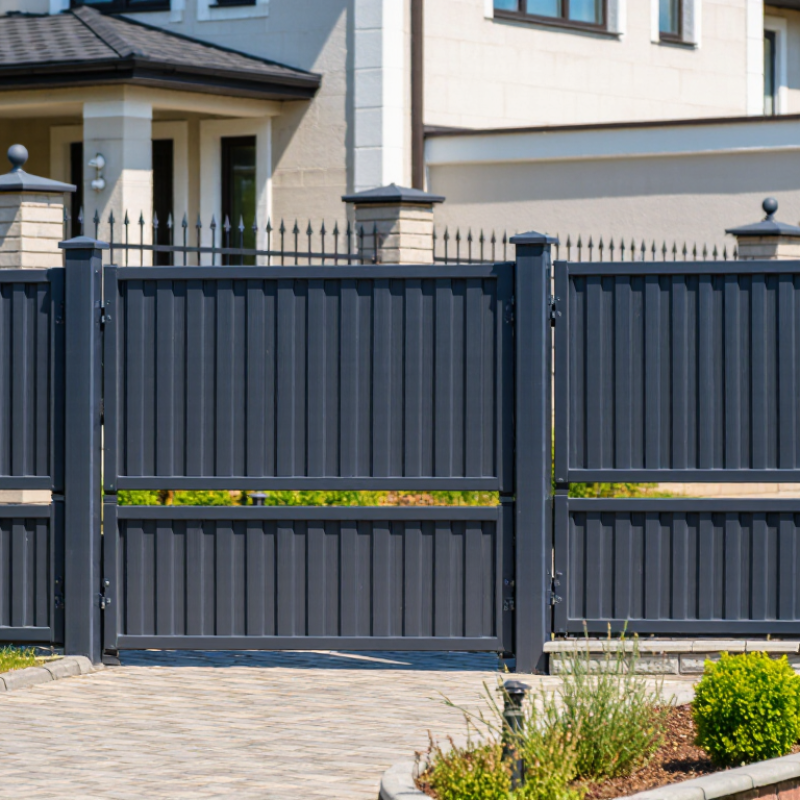
How to Choose the Best Black Aluminum Fence for Your Property?

Understanding Black Aluminum Fence Types and Features

Choosing the best black aluminum fence starts with understanding its style and structure. Picket fences create an open, welcoming boundary. Flat-top designs look clean and modern. Spear-top sections add a stronger decorative effect. For sloped ground, rackable panels can follow the landscape more smoothly than rigid sections.

Material details matter as much as appearance. Look for a durable powder-coated finish with even coverage and a deep, consistent black tone. Aluminum resists rust, which suits humid gardens and coastal air. However, thin rails may feel weak in windy areas. Check post thickness, rail size, fastener quality, and gate construction. A well-built gate should close without dragging or shaking. I once underestimated gate weight during a project. The posts later needed extra support.

Tips: Match the fence height to your privacy needs and property layout. Measure slopes before ordering panels. Leave room for gate swing and lawn equipment. Choose corrosion-resistant hardware. Ask for finish-care instructions, even though maintenance is usually simple. Wash dust with mild soap and water. Inspect joints each spring. Local pool or boundary rules may affect spacing and height, so verify them before installation. Small details matter.

How to Choose the Best Black Aluminum Fence for Your Property

Compare common fence styles by openness, privacy, and ornamental detail. Ratings are a qualitative guide; actual designs vary by manufacturer and panel configuration.

Open picket styles suit views and decorative boundaries, while privacy slats reduce visibility. Check local rules before choosing a fence for a pool or property line.

Assessing Your Property’s Layout, Needs, and Local Regulations

Choosing a black aluminum fence starts with a site survey, not a color sample. Mark property lines, slopes, drainage paths, driveways, and utility access. Measure each boundary twice. A clean drawing can still miss a low retaining wall or a neighbor’s gate swing.

The 2023 National Association of Home Builders survey found that 73% of buyers considered a patio essential or desirable.

That figure supports planning the fence around outdoor living areas, not across them. Leave clear space for furniture, grills, bins, and maintenance equipment. Aluminum suits many layouts because it is lightweight and resists rust. However, it usually provides limited privacy and little wind protection.

That trade-off matters. I have seen attractive installations fail because the fence looked right from the street but blocked a narrow side passage.

Tips: Check local zoning before ordering panels.

Rules may control height, setbacks, corner visibility, gate direction, and pool-barrier spacing. The 2021 International Residential Code also provides safety guidance, while local authorities may impose stricter requirements. Confirm permit needs with your planning office. Review homeowners’ association rules, easements, and historic-district requirements.

On sloped ground, compare a stepped layout with a racked layout. Ask for written measurements. Small errors become expensive after concrete sets.

Coastal properties may also need corrosion-resistant fasteners, as recommended in federal coastal construction guidance. Black finishes can expose scratches quickly, so inspect sample panels in direct sunlight before choosing.

Comparing Fence Height, Style, Durability, and Security

Choosing the best black aluminum fence starts with accurate measurements and realistic goals. In residential projects, I have found that height changes both appearance and privacy. A 4-foot fence defines a boundary without closing the yard. A 5- or 6-foot model offers more privacy and stronger visual separation. Measure twice. Sloping ground may require stepped or racked panels, which can change the final cost.

Style should match the property, not overpower it. Straight-top panels create a clean, modern edge, while arched or spear-top designs feel more traditional. Open pickets preserve sunlight and visibility. Narrower spacing can improve security, but it may also make the fence look heavier. I once underestimated this detail on a small garden project. The darker finish made the spacing appear tighter than expected.

Durability depends on more than black color. Look for a well-prepared surface, consistent coating, solid posts, and corrosion-resistant fasteners. Inspect welds and ask how the finish handles moisture, scratches, and strong sunlight. Security also depends on hardware. A self-closing gate, adjustable hinges, and a reliable lock matter greatly. However, no fence is completely secure. Check the ground beneath the panels, because uneven gaps can weaken the boundary. Local requirements may also affect height, gates, and placement.

How to Choose the Best Black Aluminum Fence for Your Property? — Comparing Fence Height, Style, Durability, and Security

Fence Option Typical Height Style & Visibility Durability Considerations Security Characteristics Best Suited For Maintenance
Short, open-picket fence About 3–4 ft (0.9–1.2 m) Traditional vertical pickets; preserves open views and defines boundaries without blocking sightlines. Aluminum does not rust like untreated iron or steel, but the coating can scratch and hardware may corrode. Provides a clear boundary, but its low height is generally easy to step over. Front yards, gardens, and areas where visibility is a priority. Wash periodically with mild soap and water; inspect the finish and fasteners.
Standard residential picket fence About 4–5 ft (1.2–1.5 m) Balanced, open appearance; available with flat, spear, or decorative picket tops. A quality exterior-grade powder-coated finish helps protect the surface from weathering; coating performance varies by product and exposure. Creates a more noticeable barrier than a short fence, but open pickets offer limited privacy and can be climbed. Front or side yards, walkways, and general boundary enclosure. Rinse off dirt and salt deposits; check gates, hinges, and fasteners periodically.
Tall, close-picket fence About 5–6 ft (1.5–1.8 m) Taller profile with closely spaced pickets; retains visibility while creating a stronger visual boundary. Durability depends on frame construction, coating quality, installation, and local conditions—not height alone. Offers a greater physical deterrent than shorter styles. Picket spacing and top design affect climb resistance; no open-picket fence is fully climb-proof. Backyards and properties seeking a more substantial boundary. Check panel connections, gate latches, and finish damage at least seasonally.
Flat-top pool fence Commonly around 4 ft (1.2 m), subject to local requirements Simple flat-top pickets; open construction supports visibility around a pool area. Choose components intended for the site’s exposure; pool chemicals and coastal salt can accelerate wear on finishes and hardware. Pool safety depends on code-compliant height, openings, gates, and self-closing, self-latching hardware—not the fence material alone. Swimming-pool enclosures where local pool-barrier rules apply. Rinse regularly, especially near pools or saltwater; inspect gate operation and latches often.
Decorative spear-top fence About 4–6 ft (1.2–1.8 m) Ornamental pointed picket tops create a formal appearance while keeping the fence visually open. Coating and joint quality matter; pointed details do not make the finish or structure maintenance-free. May discourage casual entry, but the open layout can still be climbed. Check local rules on pointed tops, especially near public areas. Front entrances and properties where decorative appearance is important. Clean periodically and touch up coating damage using a compatible repair product.

Selection note: Heights and configurations shown are typical residential examples, not universal specifications. Verify local building, zoning, and pool-barrier requirements, and compare product specifications for picket spacing, coating, hardware, and installation conditions.

Evaluating Installation Methods, Maintenance, and Total Cost

Choosing a black aluminum fence starts with the ground beneath it. On level soil, buried posts set in concrete are common; on an existing wall, surface-mounted posts may work if the structure can bear the load. Slopes can require stepped or raked panels, changing labor and appearance. Ask installers to price posts, gates, removal, permits, and difficult access separately. Small details matter. A low initial quote may exclude them.

For total cost, compare installation, cleaning, coating repairs, replacement parts, and likely service life. The U.S. Department of Energy’s Federal Energy Management Program recommends evaluating life-cycle costs, including maintenance and replacement, rather than purchase price alone. The International Aluminium Institute reports that recycling aluminum uses about 5% of the energy needed to produce primary aluminum. That is an environmental data point, not a guarantee of lower household costs. Salt air and lawn equipment can still damage the finish. Rinse exposed sections and touch up chips before corrosion spreads. I would ask for written coating and hardware specifications; I once assumed “black finish” meant one consistent level of protection. It doesn’t. Compare quotes using the same fence height, panel spacing, gate width, and installation method.

Selecting the Best Black Aluminum Fence for Your Property

How to Choose the Best Black Aluminum Fence for Your Property?

Selecting the Best Black Aluminum Fence for Your Property

Selecting the best black aluminum fence starts with how you use your property, not just how it looks. Measure the boundary and note slopes, gates, garden beds, and areas where children or pets play. A level panel may leave awkward gaps on uneven ground, so compare panel styles with the actual shape of your yard. Black fencing pairs well with brick, pale siding, and leafy gardens, but nearby dark walls can make it feel visually heavy. Take a sample or photograph outside in daylight before settling on a finish.

Tips: Check post spacing, gate clearance, and the hardware’s corrosion resistance. Ask how the finish is maintained, and inspect a sample for scratches. Small details matter.

Choose a height and spacing that suit your privacy and visibility needs. Open pickets preserve sightlines, while closer spacing offers a more sheltered feel. For a pool or sloped area, confirm that the proposed layout suits the site and any applicable requirements. Compare written specifications, including panel dimensions and installation instructions, rather than relying on appearance alone. I’ve seen people focus on the fence line and overlook the gate swing; it can make a narrow walkway frustrating. That detail is easy to miss. A careful site sketch helps, though it may need revisions once you see the panels in place.

FAQS

Which black aluminum fence style suits an open yard?

Open pickets preserve sunlight and visibility. Flat-top panels create a clean, modern edge.

What fence height should I choose?

A 4-foot fence marks a boundary without enclosing the yard. A 5- or 6-foot model creates stronger visual separation. Measure twice.

Can aluminum panels follow sloped ground?

Rackable panels follow slopes more smoothly than rigid sections. Measure the slope before ordering; panel choices can affect cost.

What should I check in the finish?

Look for even powder coating and a consistent black tone. Ask how the finish handles moisture, scratches, and strong sunlight.

Is aluminum suitable for humid or coastal areas?

Aluminum resists rust, making it suitable for humid gardens and coastal air. Still, choose corrosion-resistant fasteners.

What details matter in windy areas?

Check post thickness, rail size, fasteners, and welds. Thin rails may feel weak in strong winds.

How can I check whether a gate is well built?

Look for adjustable hinges, a reliable lock, and self-closing hardware. The gate should close without dragging or shaking. I once misjudged gate weight; the posts needed extra support.

How much maintenance does a black aluminum fence need?

Wash dust with mild soap and water. Inspect the joints each spring. Small details matter.

Does a fence improve security?

Narrower picket spacing and dependable gate hardware can strengthen a boundary. Check for gaps beneath panels. No fence is completely secure.

Conclusion

Choosing the right Black Aluminum Fence begins with understanding the available types and features, such as different panel designs, finishes, and levels of privacy. Consider your property’s layout, intended use, and any local rules that may affect fence placement or height. These details help narrow the options and ensure the fence fits both your practical needs and the look of your outdoor space.

Compare height, style, durability, and security before making a decision. Also consider whether the fence is suitable for your site and how it will be installed, since terrain and installation methods can affect the final result. Review expected maintenance and the total cost, including materials, installation, and future upkeep. By weighing these factors together, you can select a fence that offers a balanced combination of appearance, function, and long-term value for your property.


Liam

Liam

Liam is a dedicated marketing professional with a profound expertise in the industry, where he excels at highlighting the unique advantages of our core products. With a keen understanding of market trends and consumer needs, Liam frequently updates our company’s professional blog, providing......