China Top Aluminum Sliding Gate Manufacturers?

Time:2026-10-14 Author:Amelia
0%

Answering “China Top Aluminum Sliding Gate Manufacturers?” requires more than counting factory websites. A reliable introduction should examine alloy grade, profile thickness, welding quality, coating performance, motor compatibility, testing, and after-sales support. In a workshop, these details appear clearly: uneven welds can mark a frame, while weak rollers may create noise within months. Supplier experience matters.

The International Aluminium Institute reports that nearly 75% of all aluminum ever produced remains in use today. It also notes that recycling aluminum requires only about 5% of the energy used for primary production. These figures support aluminum’s durability and circular-economy advantages. However, sustainability claims still need evidence. Ask manufacturers for alloy certificates, powder-coating standards, test records, and traceable production photos.

Charles Martin Hall, a pioneer of the aluminum industry, said, “Aluminum is the metal of the future.” His statement is old, but the principle remains relevant. Modern Aluminum Sliding Gate systems combine corrosion resistance, low maintenance, lightness, and automated access. Market reports from Grand View Research and Research and Markets indicate continued growth across architectural products, fencing, and automated entry systems. Yet these reports often group several product categories together. They do not automatically prove one manufacturer’s leadership.

A practical comparison should therefore separate export volume from engineering capability. It should review factory audits, project references, wind-load calculations, component availability, and response times. China has many capable manufacturers. Not every supplier offers the same quality. This guide will assess leading candidates through measurable criteria, not promotional rankings. Some conclusions may remain uncertain. That uncertainty deserves honest attention.
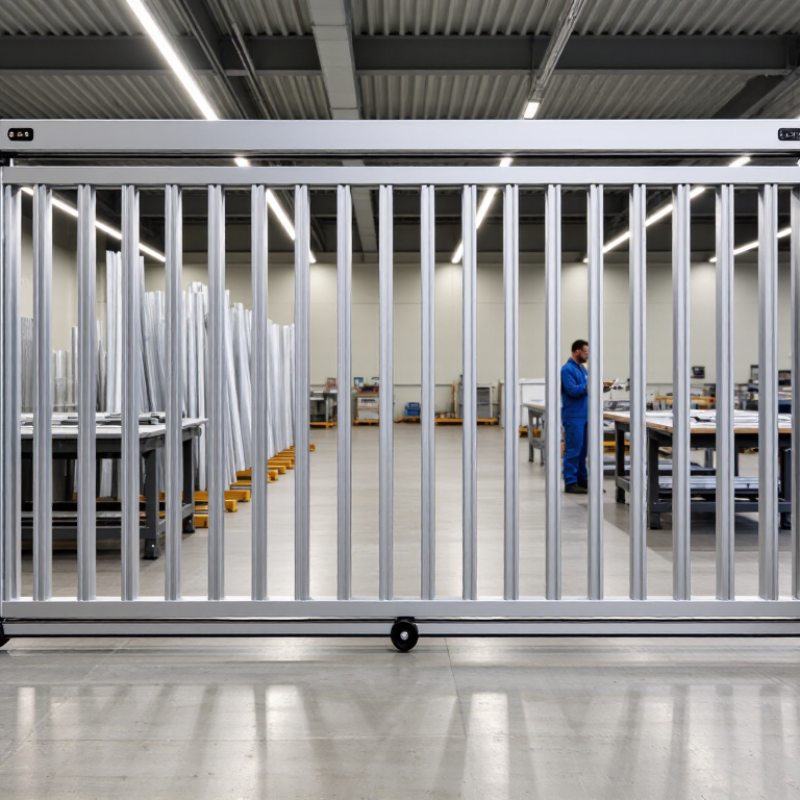
China Top Aluminum Sliding Gate Manufacturers?

What Defines a Leading Aluminum Sliding Gate Manufacturer in China?

A leading aluminum sliding gate manufacturer in China combines engineering discipline with practical site experience. The strongest suppliers understand how gates behave under rain, dust, wind, and repeated daily use. Their engineers select suitable aluminum alloys, wall thicknesses, rollers, tracks, and protective finishes for each project. The details matter. They should provide clear drawings, load information, installation guidance, and realistic production schedules instead of vague promises.

Reliable manufacturers control quality throughout production. They inspect extrusion dimensions, weld points, surface treatment, hardware alignment, and motor compatibility. Samples should be checked before mass production. Factory records, material certificates, and inspection reports make technical claims easier to verify. A useful supplier also asks about opening width, ground conditions, drainage, traffic frequency, and local building requirements. Those questions show professional judgment, not unnecessary complexity.

Customization is valuable, but it should not weaken structural performance. Experienced teams can adjust colors, profiles, infill patterns, control systems, and safety features while keeping maintenance practical. After-sales support also deserves close attention. Replacement hardware, installation training, troubleshooting videos, and responsive communication can reduce costly delays. No factory gets every detail right. A trustworthy manufacturer admits limitations, documents problems, and improves its process after feedback. That honesty often matters more than impressive showroom photos.

Key Product Types and Technical Features of Aluminum Sliding Gates

China’s aluminum sliding gate manufacturers generally offer three main designs: cantilever, track-mounted, and telescopic systems. Cantilever gates suit uneven driveways because they need no ground rail. Track-mounted gates often cost less, but soil, gravel, and ice can obstruct the rollers. Telescopic models save side space, especially on narrow residential entrances.

Material choice affects performance. 6063-T5 aluminum extrusions provide a useful balance between weight, corrosion resistance, and machinability. Powder-coated surfaces need consistent pretreatment and film thickness; appearance alone proves little. The International Aluminium Institute reports that recycled aluminum requires about 95% less energy than primary aluminum. Therefore, manufacturers with controlled recycled-content sourcing can reduce embodied energy, though strength verification remains essential.

Lightweight does not mean weak.

Technical evaluation should include gate span, wind exposure, deflection, roller capacity, and foundation movement. Stainless-steel fasteners help reduce galvanic corrosion, while sealed bearings support smoother travel in dusty environments. Automated systems should include obstacle detection, emergency release, manual override, and protection against unintended movement. EN 12453 provides a useful reference for powered gate safety, but local requirements still govern installation.

In practice, I would not select a manufacturer from catalog images alone. Request load calculations, coating test records, cycle-test results, and spare-parts availability. A very slim frame may look modern, yet it can twist under wind pressure. That detail is easy to miss.

China Aluminum Sliding Gate Manufacturers: Common Product Types & Technical Features

Indicative, non-brand-specific technical ranges for commonly used aluminum sliding gate configurations.

Cantilever and telescopic systems are commonly selected for wider openings, while tracked and bi-fold configurations can be suitable where the site allows a ground track or reduced side clearance. Actual dimensions depend on structural design, wind load, infill weight, automation capacity, and local installation requirements.

How Chinese Manufacturers Design, Engineer, and Produce Sliding Gates

China Top Aluminum Sliding Gate Manufacturers?

Chinese aluminum sliding gate manufacturers usually begin with site conditions, not decoration. Engineers check opening width, ground slope, wind exposure, and daily traffic. These details shape the gate frame, track position, and motor capacity. A coastal project may require stronger corrosion protection than an inland warehouse.

Design teams commonly build drawings in CAD and review load paths before cutting material. Aluminum profiles are selected for weight, stiffness, and joining accuracy. Welded corners can provide strength, while mechanical connections may simplify maintenance. Experienced factories also test rollers, guide posts, sensors, and control cabinets as one system.

Production quality depends on repeatable processes. CNC cutting controls profile length, while jigs help keep frames square. Workers inspect welds, surface finishes, drainage holes, and track alignment. A small error can create vibration during opening. It happens more often than brochures suggest. Prototype gates may reveal noise, flexing, or poor clearance after installation. Engineers then adjust profile thickness, roller spacing, or drainage design.

Reliable manufacturers document material grades, coating methods, inspection points, and test results. They should also provide installation tolerances and replacement guidance. However, a factory drawing cannot predict every site problem. Uneven foundations, incorrect wiring, and neglected cleaning can reduce service life. Careful communication between engineers, installers, and buyers remains essential.

Quality Standards, Certifications, and Testing Practices

China Top Aluminum Sliding Gate Manufacturers?

Quality should be verified through documents, measurements, and repeatable tests. ISO Survey 2023 recorded about 1.3 million ISO 9001 certificates worldwide. This figure shows the standard’s wide adoption, but certification alone proves little about one gate. Buyers should request the certificate scope, audit date, and factory address. They should also check whether production records match the supplied profile alloy, coating thickness, and hardware specifications.

For aluminum sliding gates, testing should cover frame strength, wheel alignment, motor endurance, drainage, and corrosion resistance. EN 13241 may apply to industrial and commercial gates in relevant European markets. ASTM B117 salt-spray testing can compare coating performance, although laboratory hours do not perfectly predict outdoor life. The International Aluminium Institute reports that recycled aluminum uses roughly 5% of the energy required for primary aluminum. That makes material traceability valuable, not merely environmental. Yet recycled content can affect consistency if alloy controls are weak. This detail is often overlooked.

Tips: Ask for batch-based inspection reports, not generic brochures. Request a sample gate or cut section. Measure coating thickness at several points. Check welds under direct light. Test the gate repeatedly with real load conditions. A polished sample can still hide uneven rollers or poor drainage. One limitation remains: test results from one production batch cannot guarantee every future shipment. Independent inspection is useful when order volume is high.

China Top Aluminum Sliding Gate Manufacturers? - Quality Standards, Certifications, and Testing Practices

Quality Dimension Applicable Standard or Reference What Should Be Verified Common Testing Practice Typical Evidence
Aluminum Alloy and Profile Quality GB/T 5237.1; EN 755 series; ASTM B221 where specified Alloy designation, temper, profile dimensions, wall thickness, straightness, and surface condition Incoming material inspection, dimensional measurement, alloy/temper review, and sampling against approved drawings Mill certificates, inspection reports, approved technical drawings, and batch traceability records
Surface Treatment: Powder Coating GB/T 5237.4; EN 12206-1; ISO 2813; ISO 2409 Coating appearance, film thickness, adhesion, color consistency, gloss, and curing quality Dry-film thickness measurement, cross-cut adhesion testing, gloss measurement, color comparison, and oven-curing checks Coating inspection report, thickness readings, color records, curing logs, and sample approval documentation
Surface Treatment: Anodizing GB/T 5237.2; ISO 7599 Anodic coating thickness, uniformity, sealing quality, color, and visible defects Eddy-current thickness testing, visual inspection, color comparison, and sealing-quality evaluation Anodizing batch records, thickness maps, color samples, and process-control reports
Corrosion Resistance ISO 9227; ASTM B117 when required by the project specification Resistance of the complete finish system to salt spray and environmental exposure Neutral salt spray testing on representative coated samples; duration and acceptance criteria must be agreed in advance Independent or in-house laboratory report, specimen photographs, exposure duration, and failure evaluation
Welding and Fabrication Quality Approved fabrication drawings; ISO 3834 principles where welding is critical Joint appearance, dimensional accuracy, distortion control, weld continuity, and post-weld finishing Visual weld inspection, dimensional checks, and non-destructive testing when required by risk level or contract Welding procedure documents, operator qualification records, inspection checklists, and corrective-action records
Gate Structural Performance Project design loads; applicable local building and wind-load requirements Frame rigidity, deflection, anchorage, guide alignment, and resistance to operating loads Design calculation review, prototype loading, deflection measurement, and installation-condition inspection Signed calculations, load assumptions, prototype test records, and installation drawings
Sliding Hardware and Operating Cycle Approved hardware specification; project cycle-life requirement Roller alignment, track smoothness, anti-lift protection, end stops, manual effort, and repeated operation Factory opening-and-closing cycles, visual inspection of rollers and tracks, and measurement of operating force where specified Functional test sheet, cycle count, hardware certificates, and pre-shipment inspection records
Motorized Gate Safety EN 12453 where applicable; IEC 60335-2-103 for relevant gate operators Emergency release, obstacle detection, limit switches, protective edges, warning labels, and safe stopping Functional safety checks, obstruction testing, emergency-release testing, and verification of control-panel settings Electrical test records, safety-function checklist, wiring diagram, user manual, and conformity documentation
Quality Management System ISO 9001 Control of purchasing, production, inspection, nonconforming products, complaints, and continual improvement Document review, process audits, internal audit sampling, and traceability checks Valid certificate issued by an accredited certification body, scope statement, audit records, and corrective-action reports
Environmental Management ISO 14001; applicable Chinese environmental regulations Control of coating chemicals, wastewater, emissions, waste aluminum, and hazardous materials Environmental compliance review, waste-stream records, chemical inventories, and site-audit checks Environmental management certificate, permits where applicable, disposal records, and compliance documentation
Worker Health and Safety ISO 45001; applicable occupational safety regulations Risk assessment, machine guarding, personal protective equipment, chemical handling, and emergency procedures Factory safety audit, training-record review, equipment inspection, and emergency-response verification Valid certificate, safety procedures, training records, inspection logs, and corrective-action evidence
Final Inspection and Shipment Control Contract specification, approved sample, packing standard, and inspection plan Quantity, dimensions, finish, accessories, operation, labeling, packaging, and protection against transit damage Pre-shipment inspection using approved checklists, photographic records, and sampling plans agreed with the buyer Final inspection report, packing list, installation instructions, warranty terms, and serial or batch records

Note: Acceptance limits, test duration, sampling frequency, and certification scope should be confirmed in the purchase specification because requirements vary by application, destination market, gate size, finish system, and automation configuration.

How to Evaluate and Select a Suitable Chinese Manufacturer

Choosing a Chinese aluminum sliding gate manufacturer requires more than comparing online prices. I have found that factory photographs can look impressive, while production capacity remains unclear. Ask for the registered company details, workshop address, equipment list, and export experience. Then request a live video inspection or an independent factory audit. See the workshop.

Evaluate the gate’s construction in practical terms. Check aluminum alloy grade, wall thickness, welding quality, track design, rollers, locks, and surface treatment. Ask for a complete technical drawing with dimensions and tolerance limits. Request a physical sample before approving mass production. A reliable supplier should explain testing procedures, packaging methods, spare parts, and installation guidance. Vague answers are warning signs.

Review quality records, material certificates, and inspection reports from recognized third parties. Confirm that electrical components, if included, meet the requirements of your destination market. The supplier should also provide a clear quotation, production schedule, payment terms, and defect-handling process. Communication matters greatly; delayed replies during sampling may become serious problems later. I once underestimated small specification changes, and they created avoidable delays. Use a written approval sheet, including color, hardware, opening direction, and loading marks. Ask harder questions. A manufacturer that welcomes verification is usually easier to manage, although no supplier is completely risk-free.

FAQS

What are the main types of aluminum sliding gates?

The common types are cantilever, track-mounted, and telescopic systems. Each suits different site conditions. Choice depends on ground level, space, and expected use.

Which gate works best on an uneven driveway?

A cantilever gate usually works better because it needs no ground rail. The driveway remains clear. Its structure may require stronger foundations and careful load calculations.

When is a track-mounted gate a practical choice?

Track-mounted gates often cost less and suit level entrances. However, soil, gravel, or ice can block the rollers. Regular cleaning matters.

Why choose a telescopic sliding gate?

Telescopic systems need less side space during opening. They suit narrow residential entrances. More moving parts can mean more maintenance.

Is lightweight aluminum strong enough for large gates?

Lightweight does not mean weak. Strength depends on span, wind exposure, frame design, and foundation stability. A very slim frame may twist under strong wind.

What aluminum and surface details should buyers inspect?

6063-T5 aluminum offers a practical balance of weight and corrosion resistance. Check pretreatment quality and coating thickness at several points. Appearance alone proves little.

What safety features should an automated sliding gate include?

It should include obstacle detection, emergency release, and manual override. Protection against unintended movement is also important. Local installation rules still govern.

Which documents and tests should a buyer request?

Request load calculations, coating records, cycle-test results, and spare-parts information. Ask for batch inspection reports, not generic brochures. One test batch cannot guarantee every future shipment. Independent inspection may be worthwhile for large orders.

Conclusion

China is home to many capable manufacturers of Aluminum Sliding Gate systems, offering solutions for residential, commercial, industrial, and security applications. A leading manufacturer is typically defined by strong engineering expertise, stable production capacity, customizable designs, reliable customer support, and consistent quality control. Key product types may include manual and automated sliding gates, cantilever gates, telescopic systems, and heavy-duty industrial models. Important technical features include corrosion-resistant aluminum profiles, reinforced frames, smooth rolling mechanisms, space-efficient structures, safety sensors, and smart control compatibility.

Chinese manufacturers generally manage the entire process from design and material selection to fabrication, surface treatment, assembly, and functional testing. Buyers should examine product specifications, load capacity, finish durability, manufacturing technology, quality standards, certifications, inspection procedures, and after-sales service. Factory audits, sample testing, production monitoring, and clear communication about customization and delivery requirements can help reduce purchasing risks. Selecting a suitable supplier requires balancing technical performance, production reliability, total cost, warranty terms, and long-term cooperation potential.


Amelia

Amelia

Amelia is a seasoned marketing professional with a wealth of expertise in our company’s core offerings. With an unwavering passion for driving growth and innovation, she plays a pivotal role in shaping our marketing strategies and enhancing brand visibility. A key aspect of her responsibilities......